Signal > Noise - Special Edition
March 11, 2026
Good evening all,
In light of recent global events, I wanted to send out a short analysis of the current state of world markets, and (goodness help me for even considering it) some very broad predictions on likely events that may occur in the weeks and months ahead.
To begin, this timely and timeless piece of advice from Hurling Frootmig and the editors at Megadodo Publications:  (shout out to my fellow Douglas Adams fans who weren’t bewildered by this reference)
What’s Happened So Far
On Feb 27, 2026, President Trump authorized Operation Epic Fury. This illegal act of extrajudicial violence was presumably named by an excited 15 year old boy and seems to have had very little thought go into the consequences of such actions.
In the short time between now and then, thousands of missiles and drones have been launched or destroyed, millions of people in Tehran, Tel Aviv, and other major cities in the Middle East have been displaced, and tens of billions of dollars have been wasted.
The Supreme Leader Ayatollah Ali Khamenei has been assassinated, along with a handful of top military officials. The US has reportedly lost 9 service members, though independent military observers expect that this number may be vastly understated.
Disturbingly, on the first day of attacks by the US, a girls’ school in Iran was destroyed by a US Tomahawk missile, killing a reported 165 children.
Indiscriminate bombing by US-Israel of residential areas of Tehran, a city of 10 million people, has killed hundreds of civilians. The destruction of the oil refinery in Tehran has blanketed the city in a caustic fog of aerosolized oil.
Similarly indiscriminate bombing of Tel Aviv by Iran has reportedly exposed the weaknesses of the “missile-proof” Iron Dome in less than a week, rapidly exhausting countermeasure resources.
Back on the ground in Washington, DC, we’ve been given the story by President Trump and Secretary of War Hegseth that the war has been successful and is completely over, but also that it’s not done yet and there may be a need for boots on the ground. The US military is firmly in control and well armed, but also there may be an imminent military draft.
Though the stated purpose of the attack on Iran was regime change away from Supreme Leader Khamenei’s oppressive religious dictatorship, already we have a new Supreme Leader Khamenei – Mojtaba Khamenei, Ali Khamenei’s son who is reportedly as- or more-strictly committed to the religious regime than his father.
These highlights (lowlights) leave out many details on attacks in surrounding countries, the bombing of schools, stadiums, and hospitals by US-Israeli forces, the bombings of water desalination plants in Qatar, Oman, Kuwait, and many more atrocities being committed.
And, of course, all of this is having a strong effect on global financial markets.
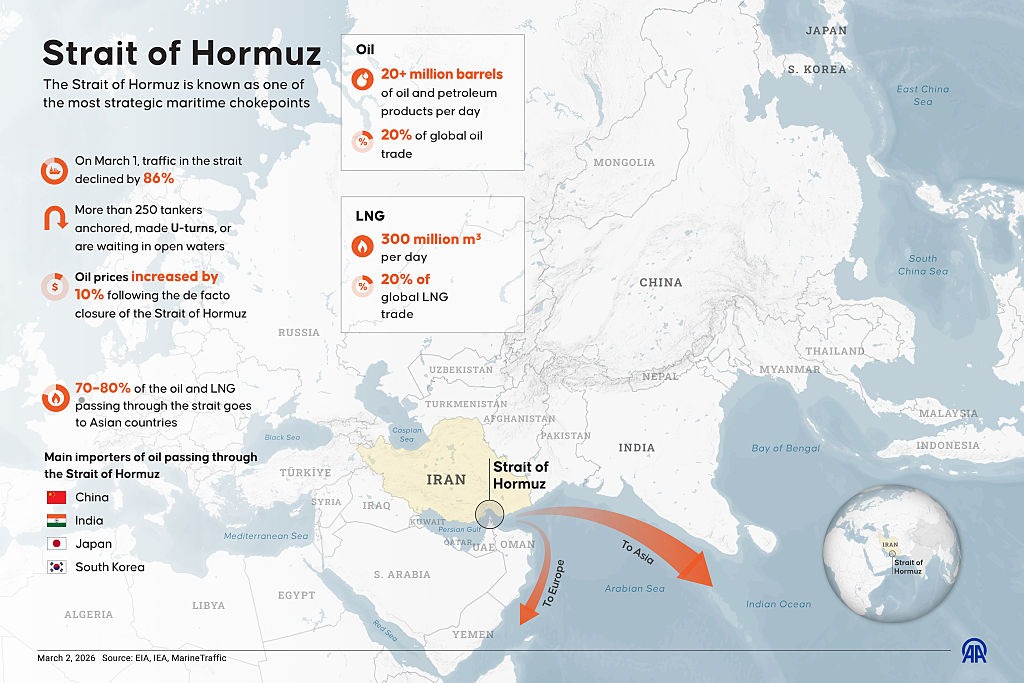
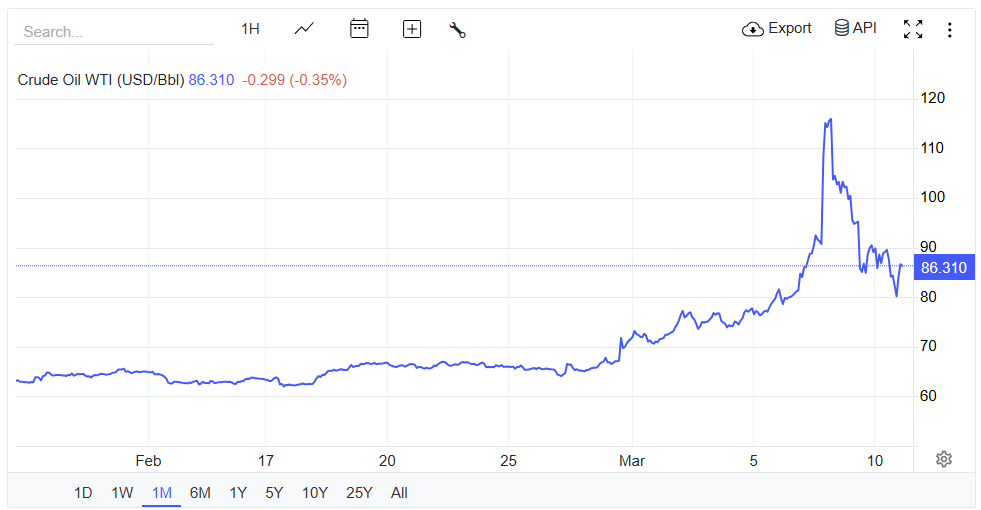
The most significant effect so far has been the immediate closing of the Strait of Hormuz. As one of the most vulnerable shipping chokepoints in the world, this has immediately cut off all seaborne shipping in the area. This is a huge problem for the global commodities markets, as this area carries a very high volume of oil and liquid natural gas to destinations around the world (primarily Asia). Readers who remember the last Iranian Oil Crisis will undoubtedly be unsurprised by the sharp and severe price changes in the cost of oil. Though world energy production has massively changed since the 1970s and we may not see gasoline rationing, the pain is already evident at the pumps with the price of a barrel of oil moving from ~U$73 before February 27th, to a recent high of as much as ~U$116 in the days that followed, a 59% increase in just 10 days. Fortunately, prices have backed off to hover around ~U$90 currently, but information is so unpredictable that violent price moves continue to be anticipated. The United States (and indeed the world) cannot rely on strategic reserves for very long.
 (source)
 (source)
This instability has sparked wild gyrations in stock market indices around the world. On Sunday evening, alerts were being issued about a 6%+ plunge in Japan’s NIKKEI. On Monday, pre-market futures for US markets were showing company declines of 5% - 10%. By end of day on Monday, the S&P500 index had largely recovered in value (thanks to those aforementioned massively conflicting statements from US leadership).
What Else is Going On?
It will come as no surprise that wars, especially those of this scale, will dominate headlines. Indeed, in the weeks leading up to these events, the Epstein Files couldn’t be bumped off the front page in North America (and for good reason). As soon as the first bombs dropped, not only did the narrative change, but the mandated-by-law (and already massively flawed) release of the Department of Justice files has now been deferred indefinitely, citing national security concerns.
The attack on Iran has obfuscated a good deal of financial news. Some stories that have significant financial implications are barely being talked about at all, outside of bond nerds like myself.
1. Federal Reserve is printing money to deal with short-term banking liquidity issues
The best breakdowns of this emerging story have been by Lyn Alden, who takes a deep look at the (supposed) differences between balance sheet expansion via short-term lending, versus the balance sheet expansion we’ve heard about since the Great Financial Crisis – Quantitative Easing. The most recent article can be found here. Though she is right to point out that the relative pace of annual expansion is very slow by comparison to previous QE cycles (3% - 6% increase), in nominal terms it is still a planned expansion of ~$40 billion per month. With the Fed balance sheet carrying ~$6.5T of total assets (debts) right now, it’s a drop in the bucket…but remember that this figure was only $1T before 2008, and America has a $2T+ deficit gap in their budget right now…and that’s before they started a very expensive foreign war, and also before…
2. US Supreme Court rejects all tariffs imposed by Trump regime
It’s a bit frustrating to note that the “surprise” on this one was actually the SCOTUS following constitutional law. With the decision issued that the tariffs instituted under “emergency” powers were not legal (nor was there a legitimate “emergency”), the US government now has the obligation to refund businesses nearly $200B in tariffs now deemed illegally collected. Costco is leading the charge on collecting that refund for consumers; one of the few taking a public stance that includes customer refunds. Many other businesses have announced plans to collect the tariffs they paid, but are those refunds going to make their way back to original purchasers? Probably not. Are consumer prices likely to fall back to pre-tariffed levels? Also probably not. Business margins just expanded again while the end consumer continues to experience higher inflation.
3. The quiet panic in Private Credit continues to get louder
Since about 2022, the “new hotness” in financial products has been Private Credit funds. Stepping outside of the traditional banking system and institutional private lenders, Private Credit funds were now being hawked to whoever would listen. Starting with well-heeled targets at large retail brokers (the RBC Dominion Securities and CIBC Wood Gundys of the world), barriers lowered slightly at first for accredited investors, and then again so that the general public could invest in an area that is opaque, poorly valuated, has fewer reporting standards, long hold periods, and very low liquidity. This began with opportunists looking to swoop in on commercial real estate deals that looked attractive after the pandemic closures (think empty office buildings), but then rapidly expanded into funding for software and “AI” companies and their seemingly infinite hunger for building data centres.
Unsurprisingly, selling opaque, complex, low-liquidity products in highly volatile and uncertain sectors to unsophisticated retail clients had predictable outcomes.
Most recently, BlackRock has “gated” redemptions (restricted allowed sales) of their flagship $26B private credit fund as redemption requests topped $1.2B in the most recent quarter. The fund only approved $620MM of those requests. Gating occurs when funds have larger than expected redemption requests that are either unfulfillable (loans are locked up already and cannot find a new buyer), or when the asset manager believes that redemptions would cause a major drop in valuation marks. As with the bank runs of old, when Private Credit funds gate redemptions in an attempt to preserve values, often this is taken as a public sign of weakness and only serves to amplify redemption requests, depress prices further, and initiate a “death spiral” as investors rush for the exits.
This is the third major redemption gating of a Private Credit fund in 2026. Before BlackRock gated their $26B fund, Blackstone gated redemptions on their $82B fund last month, and Blue Owl has lost 50% of their stock market value following the gating of their funds in early 2026. The “liquidity mismatch” (a boring term for a financial catastrophe in waiting) is akin to the Bear Stearns situation in 2008, where internal hedge funds had massive collateral calls that could not be met, leading to the bankruptcy and liquidation of the company, and triggered the largest government financial intervention in history.
The total US Private Credit market is valued at approximately $2 trillion; approximately three-quarters of the global market. If investors lose confidence, not only will liquidity dry up and valuations decline dramatically, but this crucial starting point for enormous expected technology funding will grind to an immediate halt.
So What Happens Next?
This is the part of this letter where I caveat heavily and say predicting the future is a foolish task and trying to outguess every bad situation is a great way to reach decision paralysis in a big hurry.
So here we go.
1. The War in Iran is likely to not be a short one. Should the US-Israeli alliance try to step back without enacting true regime change, it is unlikely that Iran leadership or the Iranian people will forget quickly. Persistent attacks on Tel Aviv are the most likely outcome. The Strait of Hormuz will remain effectively closed for months. Should the US military decide to get “boots on the ground”, they face an adversary far better equipped and trained than those they encountered in Afghanistan, in an equally unhospitable mountainous country that is 2.5 times the size. Both scenarios end poorly, and the risk of retaliatory attacks on US soil are significant. Trump skeptics have even raised the risk of false flag attacks in the US in an attempt to justify this war post-hoc.
My Takeaway: The consequences of this choice by the US government have barely begun, and the financial capital and human capital costs are going to escalate quickly.
2. US government financials have gone from problematic to concerning in just two months. Last year, DOGE created more expenses than they “saved” in enormous service and foreign aid cuts. The “One Big Beautiful Bill” successfully cut the tax burden of corporations and billionaires while reducing overall tax receipts by hundreds of billions in 2026 alone. The tariffs that were supposed to replace those tax receipts have now been declared illegal. The War in Iran is expected to add hundreds of billions more in military expenditures.
My Takeaway: The value of the US Dollar is at risk. The value of US debt is at risk. Though many companies will, like many other crises, continue to operate just fine, investment in US dollars or US yielding securities should be approached with high caution and currency hedging in mind.
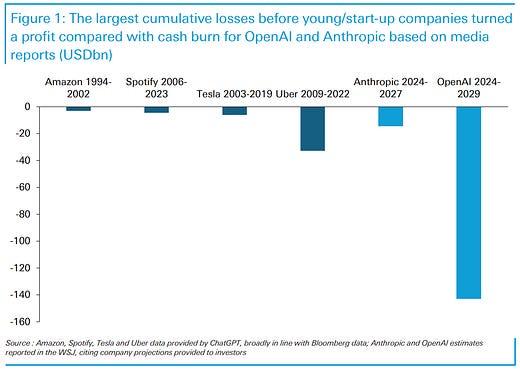
3. Credit drying up is the second stage of every financial crash in history, following the first stage of excessive margin lending to speculators. As the “AI” trend continues to fail to reach profitability, at the same time as the costs of expansion increase, at the same time as private credit funding the expansion is experiencing major issues is a confluence of interrelated events that can be ignored at an investor’s peril.
My Takeaway: Despite a new, expensive war and increasingly problematic budgeting by the US Government, the biggest issue in global finance right now is the already-illiquid Private Credit market locking up even further.
 (source)
Conclusion
Again I promised a “short analysis” of global events, and again I’ve failed miserably. If you made it this far, congratulations and thank you for your attention. If you’re jumping to this concluding paragraph after scrolling by the last 2000 words and you’re concerned about what the implications for your portfolio may be, please give me a call or send me an email and we can discuss the steps that have been taken to protect your hard-earned investments.
That’s all for this month! Keep an eye to your inboxes in the next few weeks for the “official” Signal > Noise, which will hopefully be dramatically shorter and much more boring as we discuss tax changes for the 2025 tax year and how to verify if you’re ready to file.
All my best,
Matthew
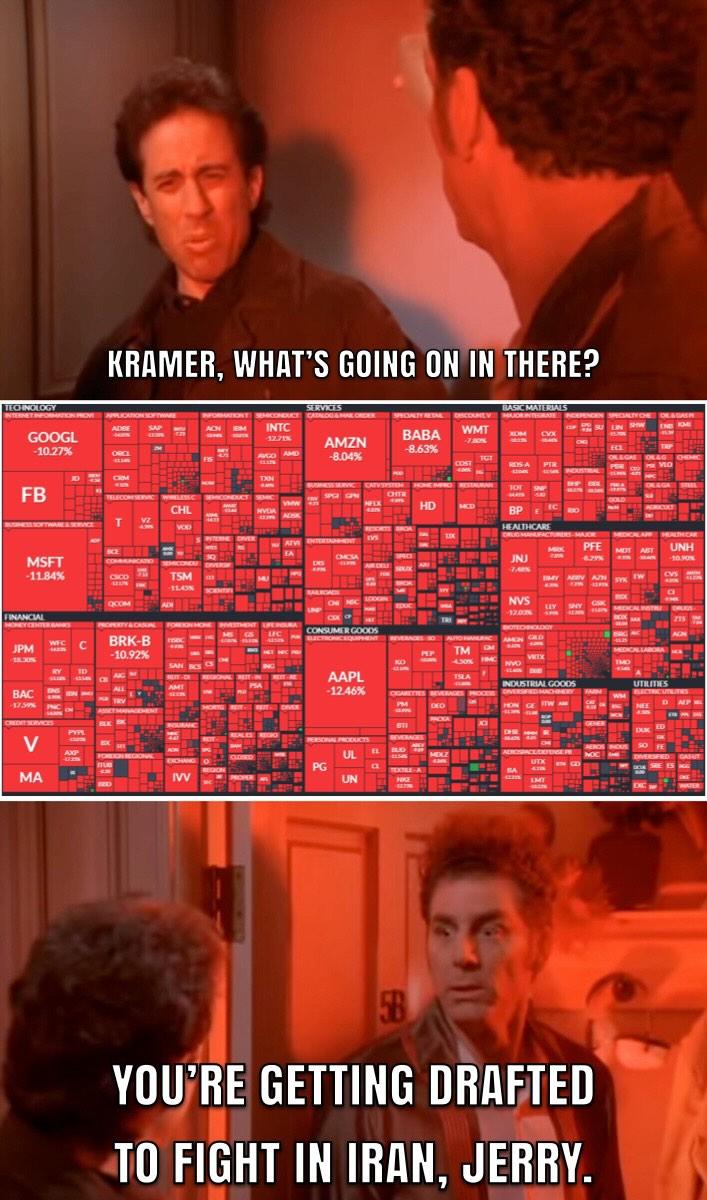
B-b-b-bonus Meme Dump
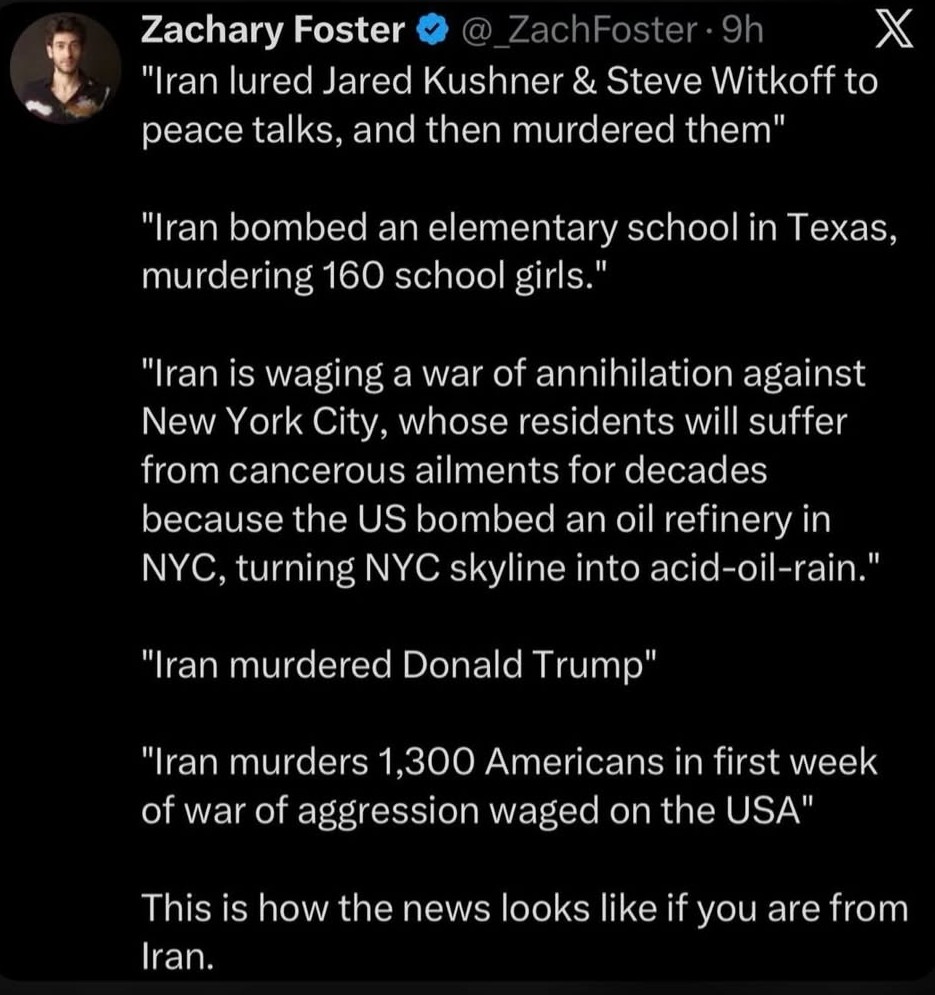
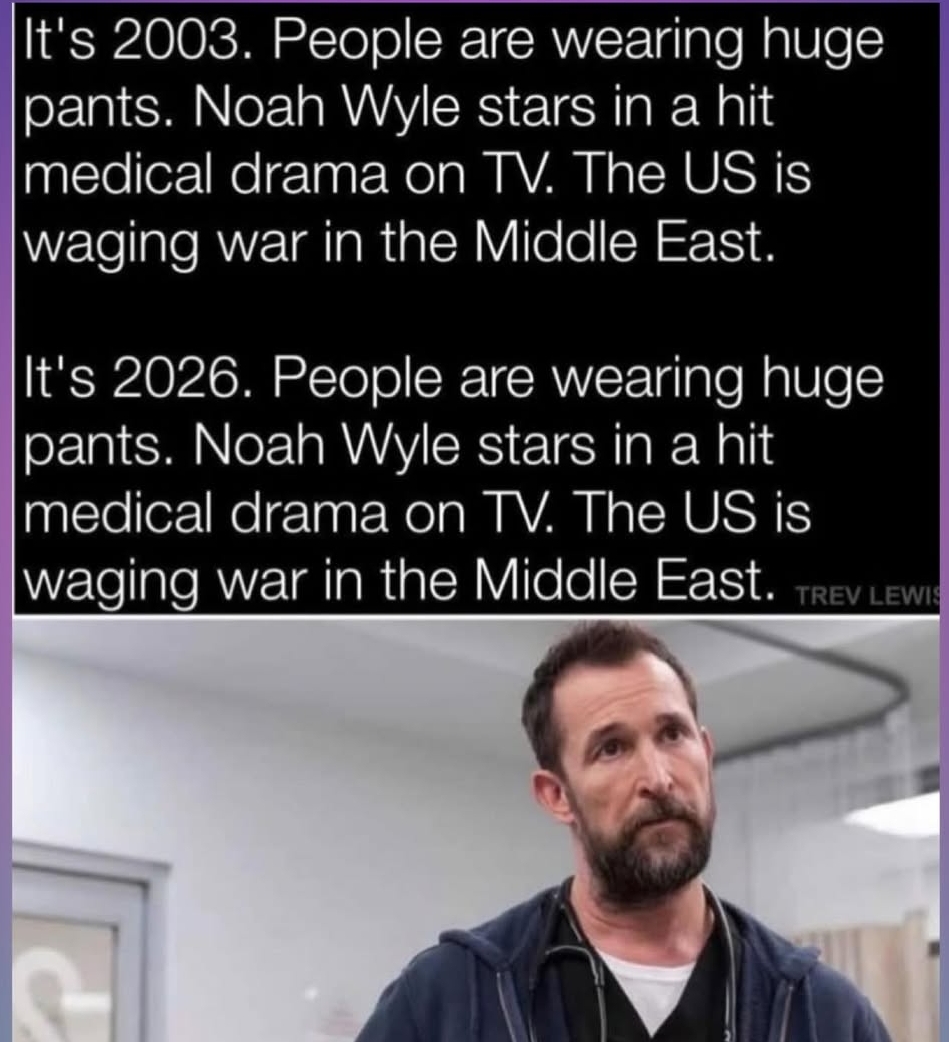
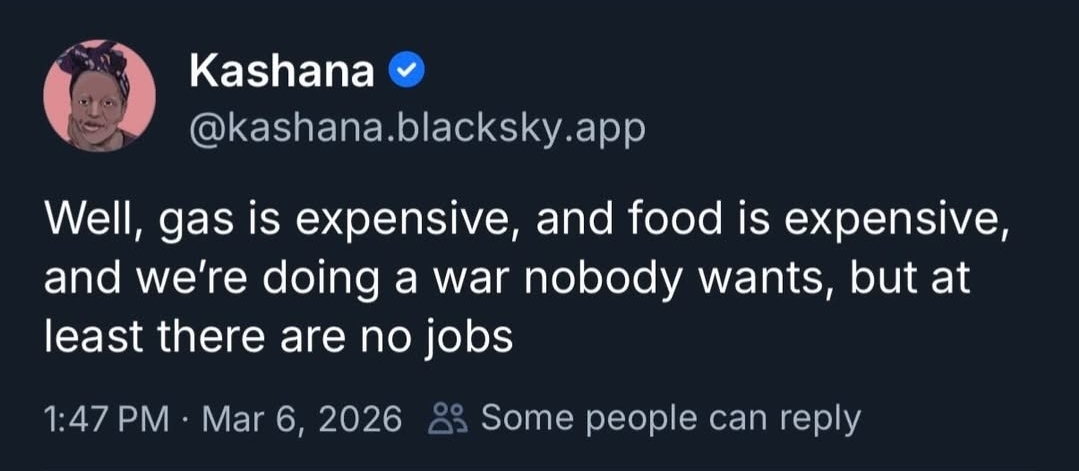
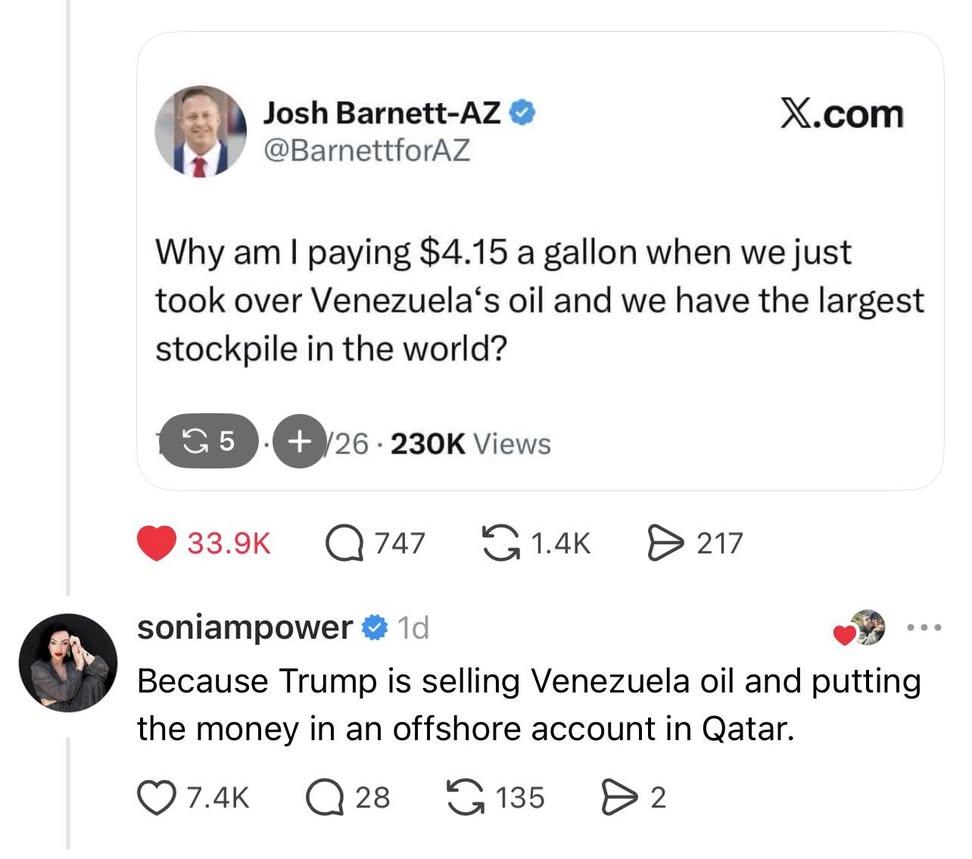
Since Millennials like me have become world leaders in meme-format info dumping and catastrophizing (3+ world-ending “once in a lifetime” events across the “best years of your life” will do that to a person), here’s a fresh crop that do a good job of balancing the dark humour and nihilism that is defining a generation.
Foundation Wealth Partners LP (“FWP”) is registered as a Portfolio Manager and Exempt Market Dealer in all Canadian provinces and the Yukon territory.
This material is distributed for informational purposes only and is not intended to provide personalized legal, accounting, tax, or specific investment advice, nor does it constitute a recommendation or an offer to buy, hold, or sell any financial products. The information is not tailored to any investor’s circumstances. Please speak to a Foundation Wealth Partners advisor regarding your unique situation. Past performance is not indicative of future results; any statements that are predictive in nature are not guarantees of future performance. For more information, please visit Disclaimer & Terms of Use