Two Weeks Later: The Bold Predictions Are Holding Up
July 20, 2026
On July 3rd, I published my Mid-Year Market Review, including what I called my "Bold Predictions” as they are contrarian to the market consensus.
At the time, the prevailing narrative was that inflation was likely to move higher through the second half of the year. Markets were pricing in additional interest rate hikes, and many investors believed the Federal Reserve would need to continue tightening policy.
My view was that inflation would likely come in lower than many expected, that June could ultimately mark the peak in this inflation cycle, and that interest rates were more likely to remain unchanged—or even move lower—than move higher.
It's still far too early to say that call was correct however those predictions, so far, have aged well.
Recent inflation reports in both the United States and Canada have generally surprised to the downside. Core inflation has continued to moderate, and expectations for additional interest rate hikes have fallen considerably. According to U.S. Bureau of Labor Statistics, the headline Consumer Price Index (inflation measurement) fell -0.4% in the last month, which is the largest inflation decline month-over-month in more than 6 years. As a result, many economists, instead of asking how many more hikes might be coming, they are increasingly debating whether central banks are finished tightening and, eventually, when they may begin cutting rates.
That shift matters.
Financial markets don't react to today's interest rates—they react to where investors think interest rates are heading. Lower expected rates generally support higher stock valuations, reduce borrowing costs for businesses, and create a more favourable environment for economic growth. Much of the recent strength in equity markets has reflected this change in expectations.
For the time being I’m sticking to my “bold predictions” of lower inflation but, as an asset allocator, it’s important to understand why the numbers came in so soft. While inflation has eased in the short term, there are underlying drivers which suggest this may be temporary rather than the start of a lasting disinflation trend.
Two unique factors appear to have played an outsized role. First, a large wave of tariff refunds flowed back through the economy after customs duties previously collected were returned. This temporarily reduced the cost of imported goods and mechanically lowered inflation readings.
Second, travel-related prices were distorted by the FIFA World Cup. Because hotel and airfare costs are captured in the CPI based on booking dates rather than travel dates, much of the price surge occurred earlier in the year. As those elevated prices rolled off, they created a temporary drag on inflation.
Meanwhile, broader measures of liquidity continue to tell a different story. Money supply (M2) and bank lending expansion have been accelerating—developments that have historically been associated with stronger economic activity and higher inflation after a lag. In other words, today's softer inflation numbers may not fully reflect the underlying trend.
From an investment perspective, I continue to view the recent market volatility as a healthy rotation rather than the beginning of a major downturn. Market leadership has broadened beyond a handful of technology stocks, liquidity conditions continue to improve, oil prices have remained surprisingly stable despite geopolitical concerns, and while corporate earnings growth is slowing, it is doing so from exceptionally strong levels rather than collapsing.
Taken together, the evidence continues to support the case for higher equity prices over the medium term. Short-term volatility and seasonal weakness are normal during the summer months, but the fundamental backdrop remains constructive. Rather than signaling the end of the bull market, recent market fluctuations appear more consistent with a pause within an ongoing expansion.
Recent Portfolio Changes:
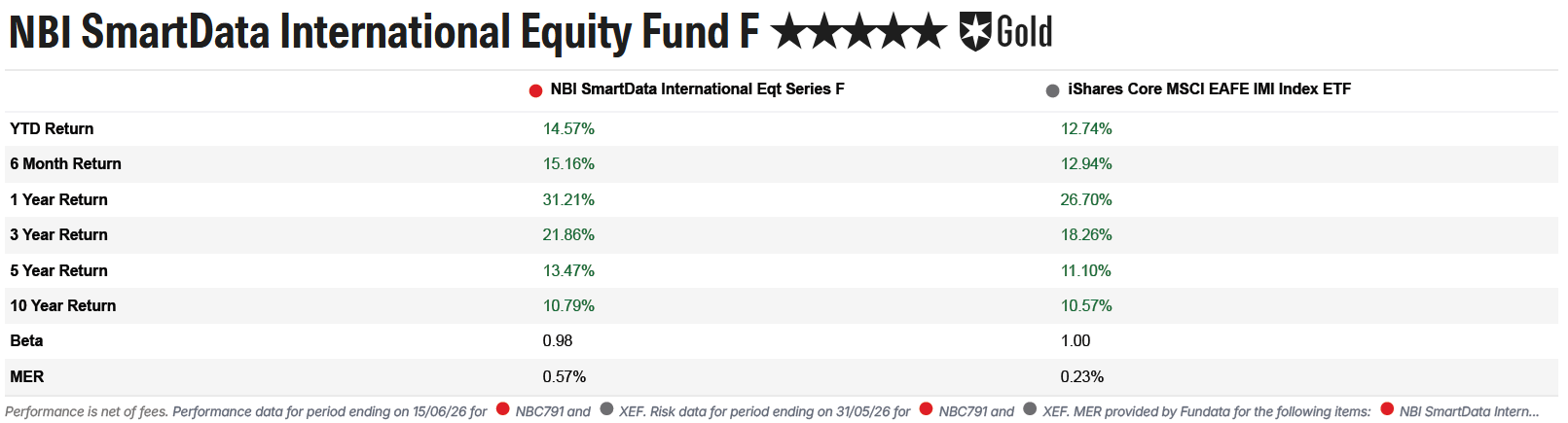
In our Foundation Wealth Equity Pool, I’ve replaced the Canoe International Equity Fund with the NBI SmartData International Equity Fund. Canoe employs a traditional buy-and-hold stock-picking strategy, while NBI uses a quantitative, data-driven process that adapts as market conditions change. The result has been stronger long-term performance at a lower cost, outperforming both its benchmark and peer group while maintaining a slightly more defensive profile during periods of market volatility.
 In our Foundation Wealth Income Pool, I’ve started a position in Dynamic Discount Bond ETF (DXDB) whose mandate is to generate tax-efficient returns via discounted investment-grade bonds. If my thesis is correct and inflation continues to surprise to the downside, these bonds should benefit which producing a current yield of 3.89%.
Mark Ting, CFP®, CIM® is a registered Portfolio Manager at Foundation Wealth Partners.
Foundation Wealth Partners LP (“FWP”) is registered as a Portfolio Manager and Exempt Market Dealer in all Canadian provinces and the Yukon territory.
This material is distributed for informational purposes only and is not intended to provide personalized legal, accounting, tax, or specific investment advice, nor does it constitute a recommendation or an offer to buy, hold, or sell any financial products. The information is not tailored to any investor’s circumstances. Please speak to a Foundation Wealth Partners advisor regarding your unique situation. Past performance is not indicative of future results; any statements that are predictive in nature are not guarantees of future performance. For more information, please visit Disclaimer & Terms of Use